Reykjavik Art Museum: Ásmundarsafn
Nestled in a corner of Reykjavík, Ásmundarsafn seamlessly blends art and nature in a way that invites quiet reflection. From the sculpture garden to the surrounding streets, my visit offered a refreshing glimpse into Iceland’s authentic character and creative spirit.
Tucked away from Reykjavík’s main tourist streets, Ásmundarsafn was the third of three Reykjavik art museums I visited. Located at the former estate of Icelandic sculptor Ásmundur Sveinsson, Ásmundarsafn offers an inviting experience of both art and nature. The museum displays work both indoors, in the Ásmundur’s former studio and home, and outdoors, in Ásmundur’s former garden.
My journey to Ásmundarsafn began with a 30-minute walk from my hotel in downtown Reykjavík. I walked through streets that felt unkept in comparison to the clean, tourist-friendly zones I grew accustomed to too. I took a beat and thought: “this is Reykjavík in its most authentic form, unpolished and charming in its imperfections.” It was refreshing to see the streets of the city. My walk offered a glimpse into local life and the true character of Iceland. The rough beauty of my journey was a reminder that sometimes the best experiences are found off the beaten path.
As I walked to Ásmundarsafn, I passed U.S. Embassy with its large fences and threatening signage. Ásmundarsafn was nestled in a peaceful part of the city one street over from the U. S. Embassy. Despite being surrounded by busy streets and governmental buildings, the museum’s location offers a serene escape, a perfect spot to immerse oneself in the art that Ásmundur created and exhibitions of living artists.
Ásmundarsafn offered a place where art and nature intertwine. From the outside, the architecture home was as captivating as the art around it. Inspired by Mediterranean vernacular design, the building’s structure reflected Ásmundur’s infatuation with Egyptian pyramids and Arab round homes. I arrived between exhibitions, which meant I could not explore the interior of the museum, but a kind museum worker greeted me and warmly urged me to explore the outdoor pieces that make up a sculpture garden.
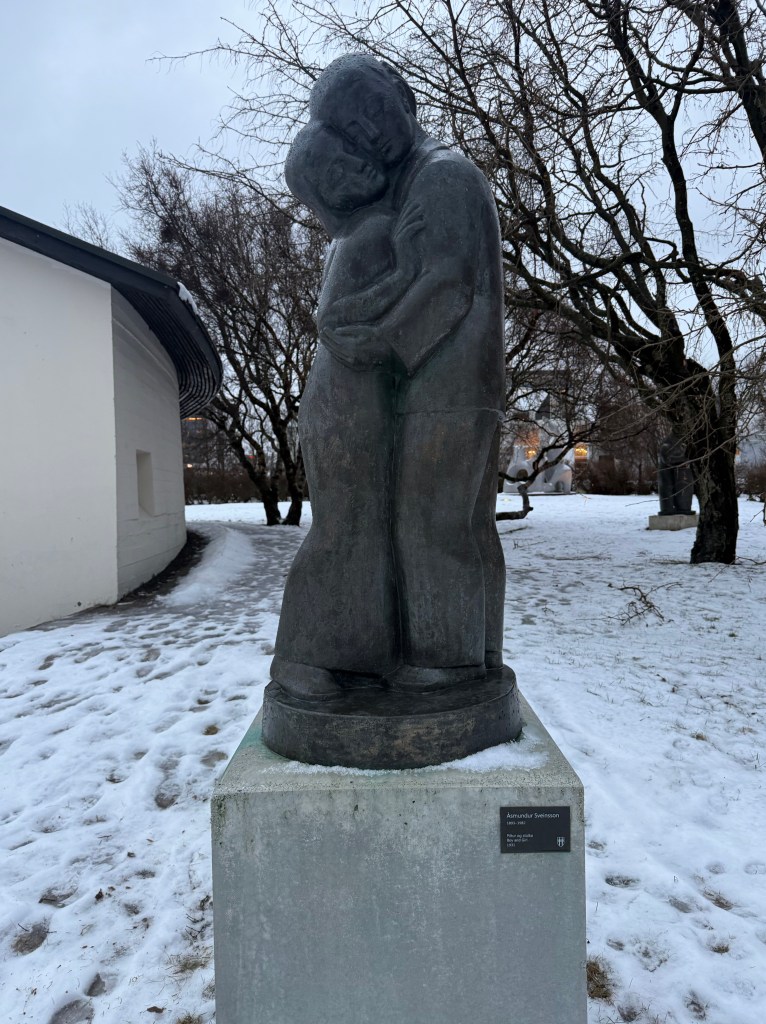
I was left alone in the garden to appreciate all that was Ásmundur. The garden was filled with around 30 sculptures by Ásmundur, each piece offering a unique interpretation of human emotion and experience.
The sculptures had features that had themes of people at work, humans and animals, sagas, and completely abstract pieces. Among the sculptures, two stood out to me: “Boy and Girl” and “Midsummer Night.” These human themed works captured the tenderness of love and the fleeting beauty of youth in a way that was both simple and profound. The sculptures transcended stone and their expressions full of life and emotion. Standing in front them, I felt a deep connection to the feelings they portrayed. I stood in awe as the powerful reminder that art’s ability to evoke real emotions rushed over me.
Growing up, I was not drawn to sculptures. I often associated them with classical depictions of stoic figures or grand monuments that did not speak to me. Over time, however, my perspective on art has shifted. I have learned to find beauty in the small, overlooked details of the world—whether it is the vibrancy of orange or the gleam of silver chains. Similarly, the sculptures at Ásmundarsafn helped me see the deeper beauty in the world around us, transforming the space into a place of quiet reflection and emotional resonance.
Although I did not get to see the interior exhibits, the garden itself was enough to leave an impression. It was a peaceful space where the art was not just something to be looked at—it was something to be felt. The weathered streets, the rough beauty of the city, and the sculptures in the garden all came together to create an experience that resonated long after I left.
 AJ Addison